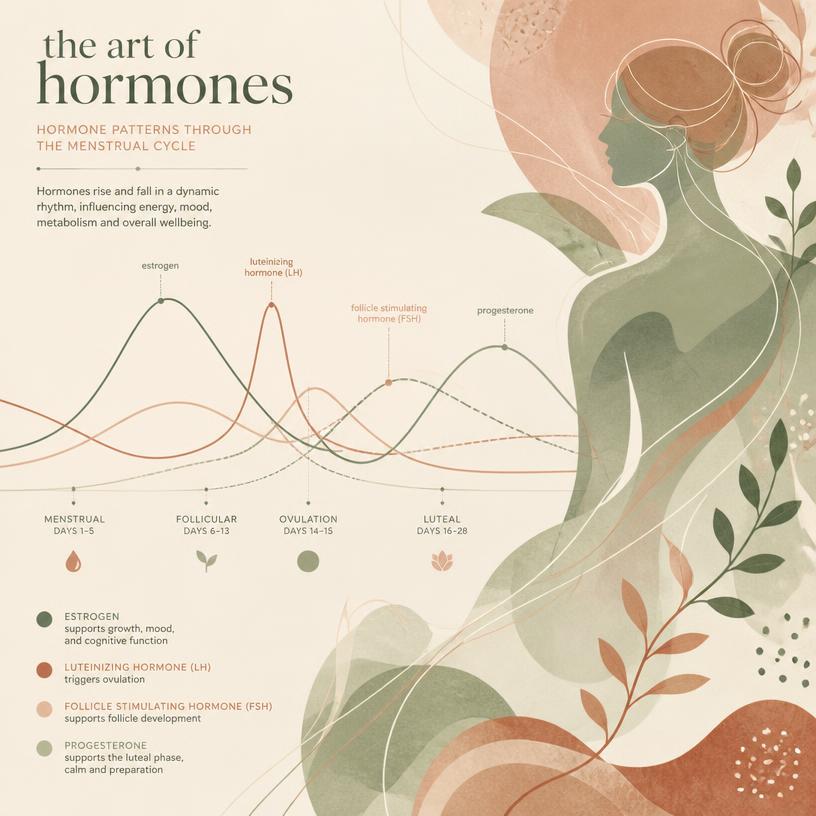
For most of us, menstrual education stopped at a diagram, a pad, and a whispered assurance that it would all be fine. It is not fine. The menstrual cycle is a four-phase feedback loop that shapes energy, cognition, mood, and immunity every single day.
The four phases, without the euphemisms
Menstruation, follicular, ovulation, luteal. Four distinct hormonal environments, four distinct bodies. When we treat the cycle as noise instead of signal, we miss the most consistent biomarker most people will ever have.
“Your cycle is not a bug in your productivity. It is the operating system.”
§1. Menstrual (Days 1–5)
Estrogen and progesterone are at their lowest. The uterine lining sheds. Energy is often low, introspection is high, and pain tolerance drops.
§2. Follicular (Days 6–13)
Estrogen climbs. Cognitive flexibility, verbal fluency, and stamina rise with it.
What to track, and what to ignore
- Cycle length and bleed length — the two most useful numbers.
- Cervical fluid changes across the month.
- Sleep, mood, and libido as trailing indicators.
- Symptoms that repeat in the same phase for three cycles in a row.